

THE PRACTICAL VIEW
Governance needs to show up at the moment someone uses a tool, approves an output or investigates a mistake. It cannot live only in a document.
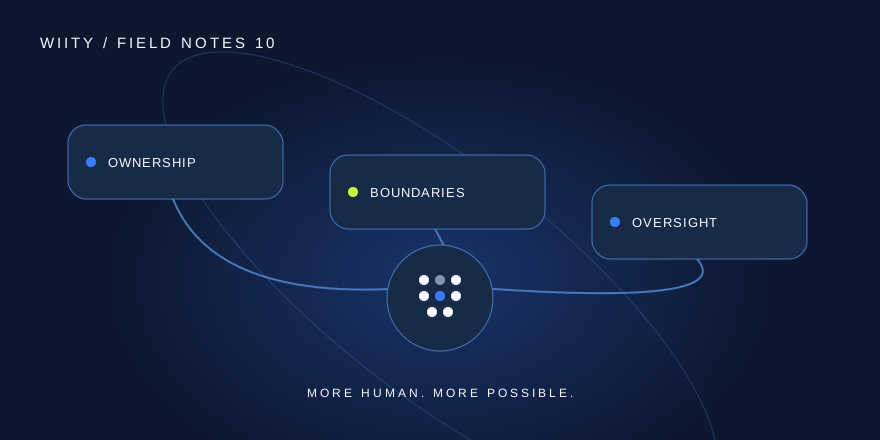
Keep an inventory with named owners
Record each AI use case, its purpose, supplier, users and data sources. Include AI features inside existing systems. Identify who approves the use case, who operates it and who can stop it. Review this inventory when the product or workflow changes.
Assess the consequences of error
A mistaken internal draft and an incorrect candidate rejection have different consequences. Consider who could be affected, how the issue would be detected and whether it can be corrected. Higher-consequence workflows need stronger testing and meaningful human review.
WORKED EXAMPLE · ILLUSTRATIVE
Rehearse the incident before the rollout
Use a fictional scenario: an automated client update contains a candidate detail that should not have been included. Who pauses the workflow? Who establishes what was sent and to whom? Who assesses the consequences and determines the response? Work through the questions with the operational owner and relevant privacy or legal adviser before the system goes live.
Where it can go wrong
If nobody can identify the owner or find the activity record, an approval step earlier in the process will not resolve the problem. The operating model needs a clear response path as well as preventive controls.
Make data boundaries practical
Identify what information is needed and which tools may receive it. Document access, retention and connected processing. Give people examples of acceptable and unacceptable use. Do not rely on a policy statement alone to prevent sensitive information reaching an unapproved service.
Design a real human approval point
The reviewer needs relevant evidence, enough time and authority to challenge the output. Make it easy to correct, reject or escalate a recommendation. A routine click on an approval button is not meaningful oversight if nobody understands what they are approving.
Record and learn from incidents
Keep proportionate activity records that show what happened and who acted. Provide a route for staff and affected people to raise concerns. Investigate errors, update the workflow and retest. Avoid collecting unnecessary sensitive information simply because logging is available.
Use current guidance and appropriate expertise
Australia’s Guidance for AI Adoption sets out six essential practices and evolves the earlier voluntary standard. Use official material alongside advice relevant to your organisation and use case. This article is operational guidance, not a determination of your legal obligations.
Sources & further reading
PUT IT TO WORK
Take this into your next team conversation
Tick off the points you have covered. This is a working checklist, not a compliance score. Selections reset when you leave the page.
0 of 4 points covered
Questions worth asking
Who should own AI governance in a recruitment agency?
Leadership needs to establish accountability, with named operational owners and input from the relevant technology, privacy, legal and people specialists. The right arrangement depends on the organisation and use case.
How often should we review an AI workflow?
Set a review cycle proportionate to its consequences and frequency of use. Also review after material supplier or model changes, incidents, new data sources and changes to the process.
Further reading
For data-use decisions, refer to the OAIC’s guidance on commercially available AI products. For a structured risk-management reference, see the NIST AI Risk Management Framework. These sources support further assessment; they do not validate an individual product or configuration.
Continue with Australian AI Governance for Recruitment.
This guide builds on Jordan’s Hyper Automate resource library, updated for Wiity. Worked examples illustrate the approach; they are not customer case studies.